
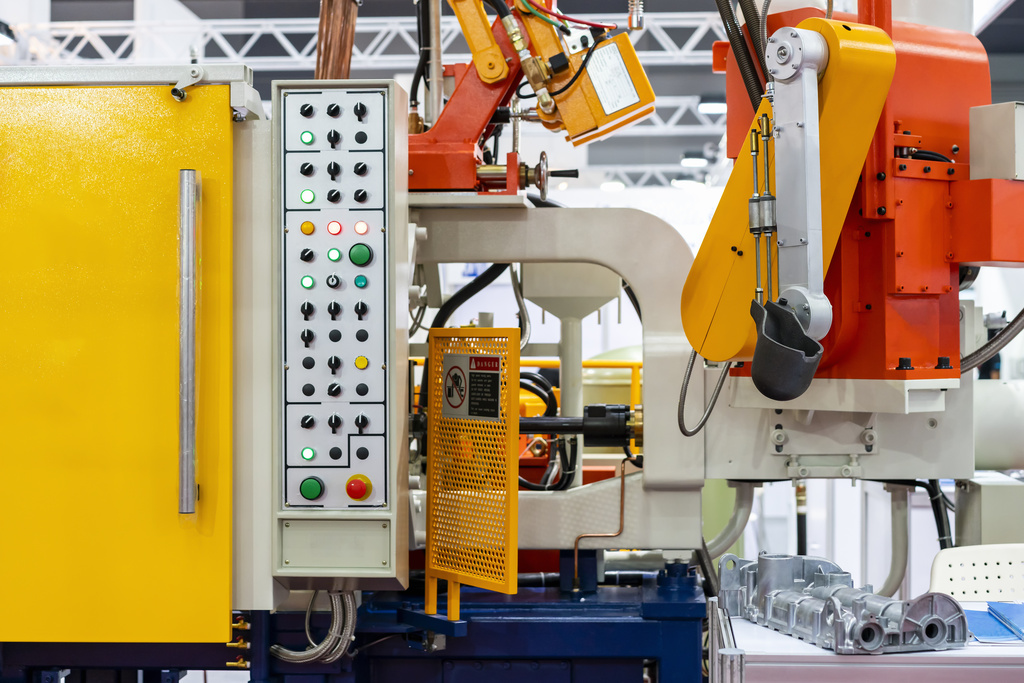
Among the automotive component manufacturers in Spain affiliated with Autoparts from Spain, there are manufacturers of workshop equipment and tools for automobiles.
Among the different types of workshop equipment and tools for automobiles, ranging from inspection and verification equipment such as brake diagnostic tools and opacity meters to hydraulic extractors and manual riveters, you can also find dies for automobiles, an essential element in vehicle production.
One of these manufacturers of workshop equipment and tools for automobiles that belongs to Autoparts from Spain is the automotive component manufacturer Gestamp, a Spanish multinational specializing in the design, development, and production of metallic components for major automakers, covering areas such as bodywork, chassis, and mechanisms.
Additionally, this company has internal capabilities for die development and production, covering the entire value chain, including design, machining, construction, setup, prototyping, and monitoring.
Die cutting, also known as stamping, is the process by which a sheet is subjected to specific transformations without generating chips to obtain a piece with a certain geometric shape.
Die work requires a press device, which can be mechanical or hydraulic, generally having a reciprocating linear motion. These presses exert the force needed to perform embossing, cutting, or punching.
The materials or components typically subjected to this type of machining are sheet metal, referring to mechanical material sheets, from which, using progressive dies and presses, most of the profiles for automotive bodywork are generated.
When discussing types of dies, three categories are established:
Thanks to the production of dies by manufacturers of workshop equipment and tools for automobiles, embossing and stamping work can be carried out, such as:
All of this enables car body manufacturers to produce car bodies, which today not only serve to create the vehicle's cabin but also enhance the car's performance and reduce pollutant emissions through improved aerodynamics, lightness, or efficiency in habitability.
The importance of the car body for safety, comfort, fuel consumption, cost, and image means that there are currently sophisticated design and manufacturing processes.
Among the different types of car bodies that exist, the most widely used type for making passenger cars today is the unibody car body, composed of various parts that are joined by resistance spot welding, making it easier to replace. In this type of body, the sheet metal bears the entire structural load of the vehicle, and the parts work together to provide greater rigidity.
On the other hand, other vehicles such as SUVs, buses, trucks, vans, or cars with fiberglass bodies use a body-on-frame car body. This type of body is one of the oldest. It consists of a rigid frame onto which the mechanical components and the body structure are incorporated, so the frame bears the forces from the transmission and the engine, in addition to the weight.
The Spanish automotive components industry plays a prominent role in the international automotive sector. Spanish automotive component manufacturers are present in more than 170 countries, with exports accounting for over half of their turnover.
In this context, the Spanish automotive component manufacturing sector is crucial to the vehicle's value chain, contributing approximately 75% to the total.
The international expansion of the Spanish automotive equipment and component industry is a reality, thanks to the high productivity and quality of Spanish automotive component suppliers, the high qualification of their workforce, substantial investments in research and development (R+D), and their strong commitment to environmental sustainability.
At Autoparts from Spain, we wholeheartedly support the 'Made in Spain' component sector and include many of these manufacturers on our platform, representing the best of the 'Spanish Brand' in automotive component manufacturing.
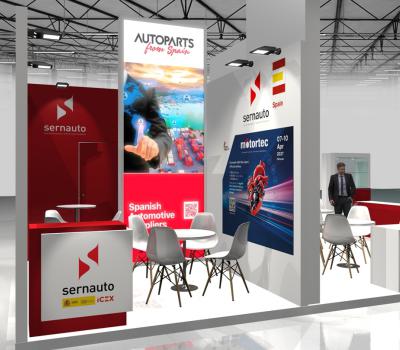
Internationalisation is setting the course for the sector. In 2025, Autoparts From Spain consolidates its position as a key platform to drive the international projection of Spanish automotive components suppliers.
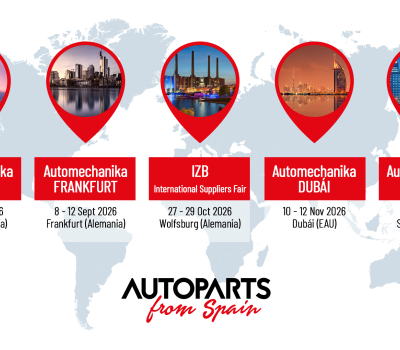
Autoparts From Spain boosts international visibility in 2026. Discover the key trade fairs for Spanish automotive components suppliers.
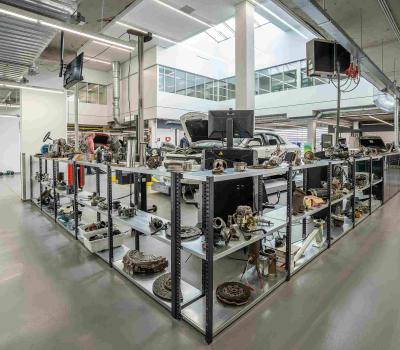
The automotive components industry is changing in 2026. Electrification, digitalisation and Industry 4.0 are setting the direction. Discover the key trends shaping the future of the sector.